
The Pyramids of Giza have watched the Nile valley for more than 4,500 years — royal tombs, engineering triumphs, and the world’s most enduring monuments. Now a UNESCO World Heritage Site and one of the Seven Wonders of the World. Before you plan a visit, learn more about the history of the Pyramids of Giza.
Pyramids of Giza timeline: key dates at a glance
c. 2670 BC: Step Pyramid of Djoser at Saqqara: the dawn of stone monumental building.
c. 2630 BC: Snefru’s Red Pyramid (Dashur): the first true smooth-sided pyramid.
c. 2560 BC: Great Pyramid of Khufu completed (the high-point of Giza’s building era).
c. 2530 BC: Pyramid of Khafre finished; the Great Sphinx carved nearby.
c. 2510 BC: Pyramid of Menkaure completed; royal pyramid building declines in scale.
820 AD: Caliph al-Ma’mun tunnels into the Great Pyramid in search of treasure.
1196 AD: Attempted demolition by Sultan Al-Aziz; site survives with minor damage.
18th–19th centuries: European explorers map and record the site systematically.
1979: Giza becomes part of a UNESCO World Heritage listing; modern conservation begins.
21st century: Non-invasive scanning (muon imaging, radar) reveals hidden voids and new research directions.
History of the Pyramids of Giza explained
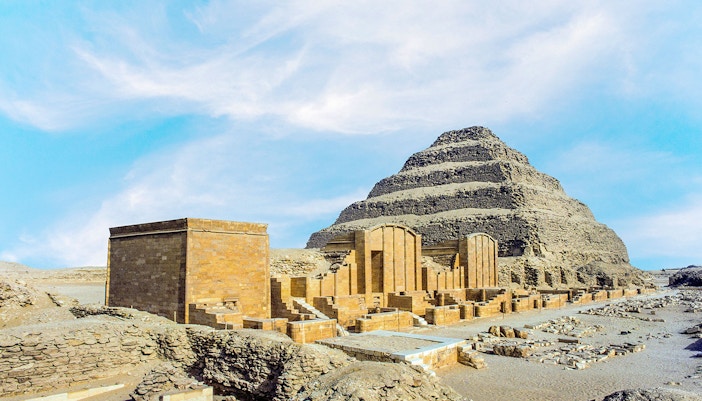
Origins of pyramid building
Egypt’s pyramid tradition began with mastaba tombs, later evolving into step pyramids like Djoser’s at Saqqara. By the 4th Dynasty, builders perfected smooth-sided pyramids, paving the way for Giza. These monuments reflected not just architectural skill but also deep religious beliefs in kingship and the afterlife.
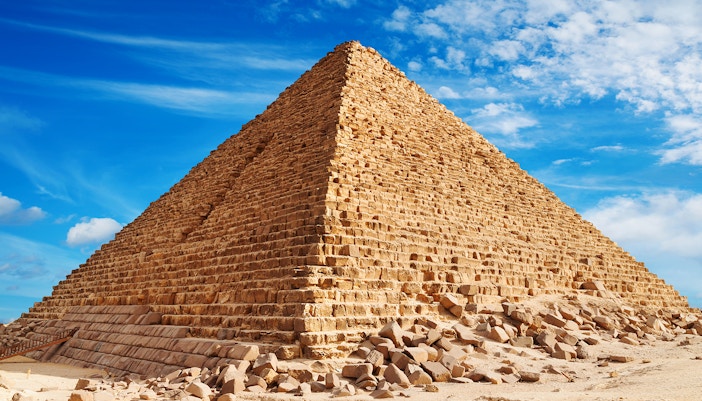
The Great Pyramid of Khufu
Completed around 2560 BC, Khufu’s pyramid is the largest ever built. Standing originally at 146.6 meters, it used over 2 million limestone blocks. Inside lie corridors, chambers, and hidden spaces still being studied today. This masterpiece defined Egypt’s golden age of pyramid construction.
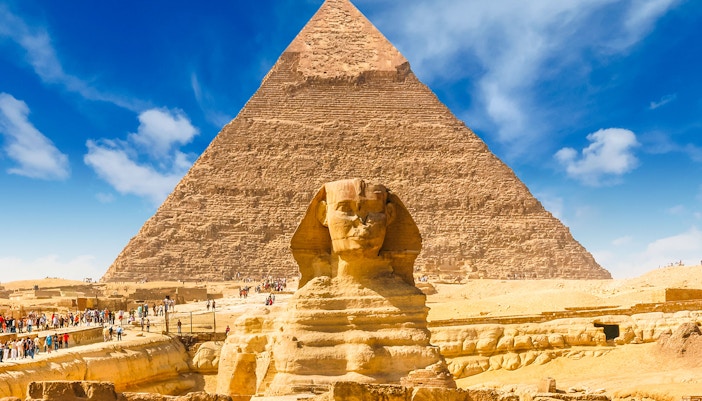
The Pyramid of Khafre and the Sphinx
Khafre’s pyramid looks taller than Khufu’s thanks to its elevated base and surviving limestone casing. It is also linked to the Great Sphinx — the massive lion-bodied, human-headed guardian carved from bedrock. Together, they form the classic Giza silhouette.
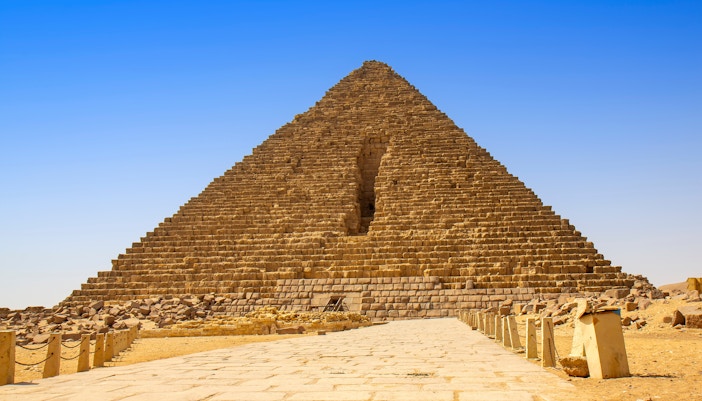
Menkaure’s pyramid and smaller complexes
The last of the main pyramids, Menkaure’s structure is smaller but finely built. Excavations revealed associated temples, causeways, and queens’ pyramids, showing that Giza was more than three tombs — it was an entire ceremonial landscape.
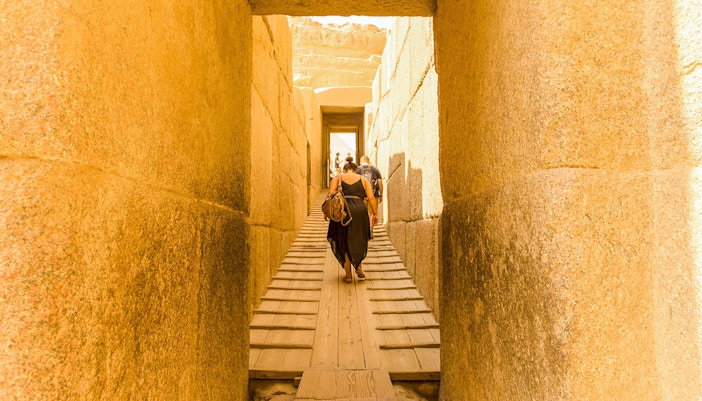
Life around the pyramids
Archaeology shows workers were not slaves but skilled laborers. Excavations uncovered housing, bakeries, and medical care, proving pyramid building was a national project, not forced toil. This insight reshapes how we understand life in ancient Egypt.
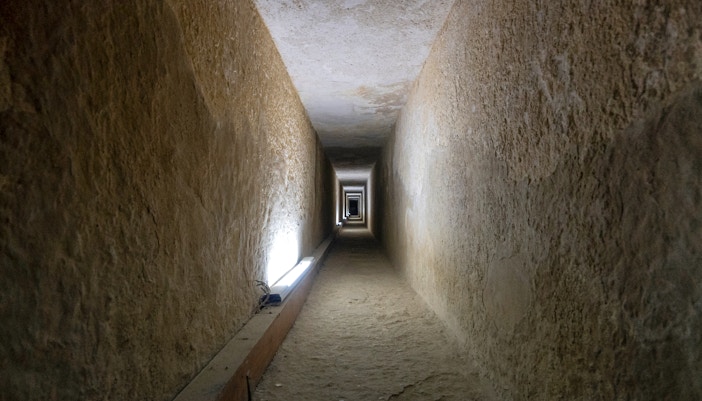
Rediscoveries and modern research
From medieval explorers tunneling inside to today’s muon scans and radar imaging, each era added new knowledge. Modern technology continues to reveal hidden chambers and refine our understanding of how the pyramids were built.
Construction of the Pyramids of Giza
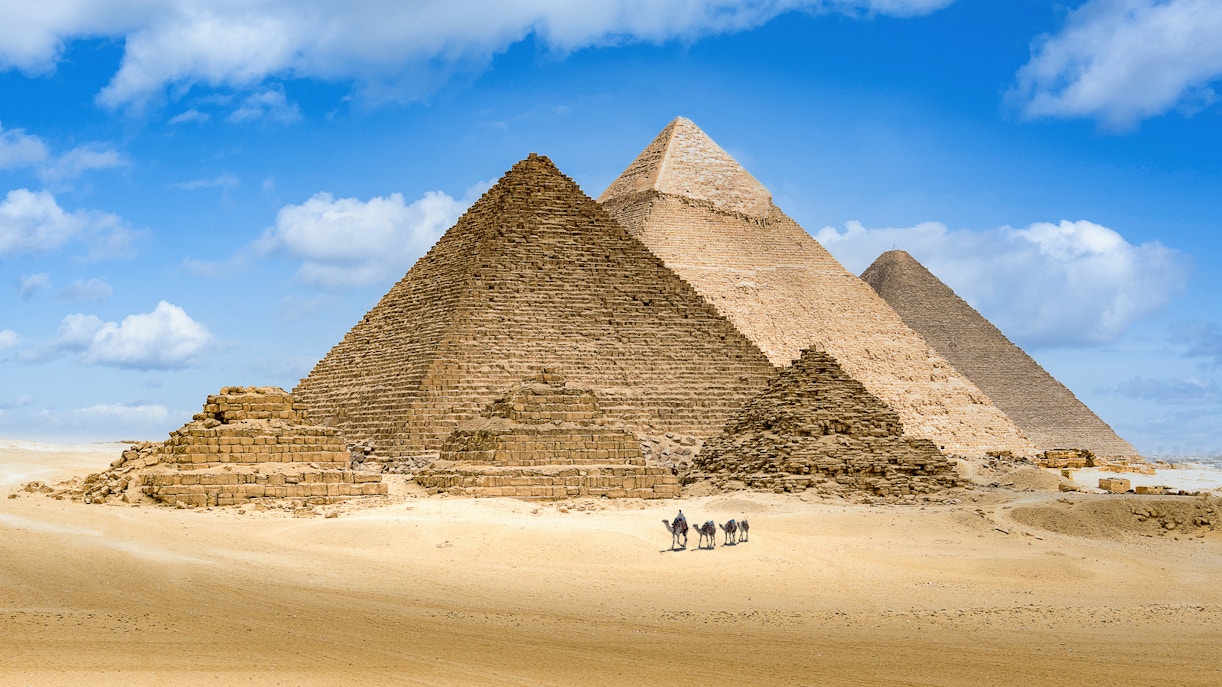
The Pyramids of Giza were feats of planning, logistics, and human effort. Archaeologists now believe most limestone was quarried on-site, with granite hauled from Aswan. Workers moved blocks on sledges over wet sand or ramps, and the nearby Nile may have helped transport heavy stone. Far from being slave labor, evidence shows a well-fed, organized workforce of thousands. Their knowledge of astronomy, geometry, and engineering ensured the pyramids aligned with cardinal points and stood the test of time.
- Pharaoh Thutmose IV restored the Sphinx, leaving a stone tablet between its paws as proof.
- Khufu’s solar boats, buried beside his pyramid, reflect ancient beliefs in a pharaoh’s eternal journey.
- Medieval rulers tried dismantling the pyramids but quickly abandoned the task.
- Modern scans using cosmic rays revealed hidden voids inside the Great Pyramid.
- Discoveries and age-old mysteries continue to keep Giza in the global spotlight.
The Pyramids of Giza today
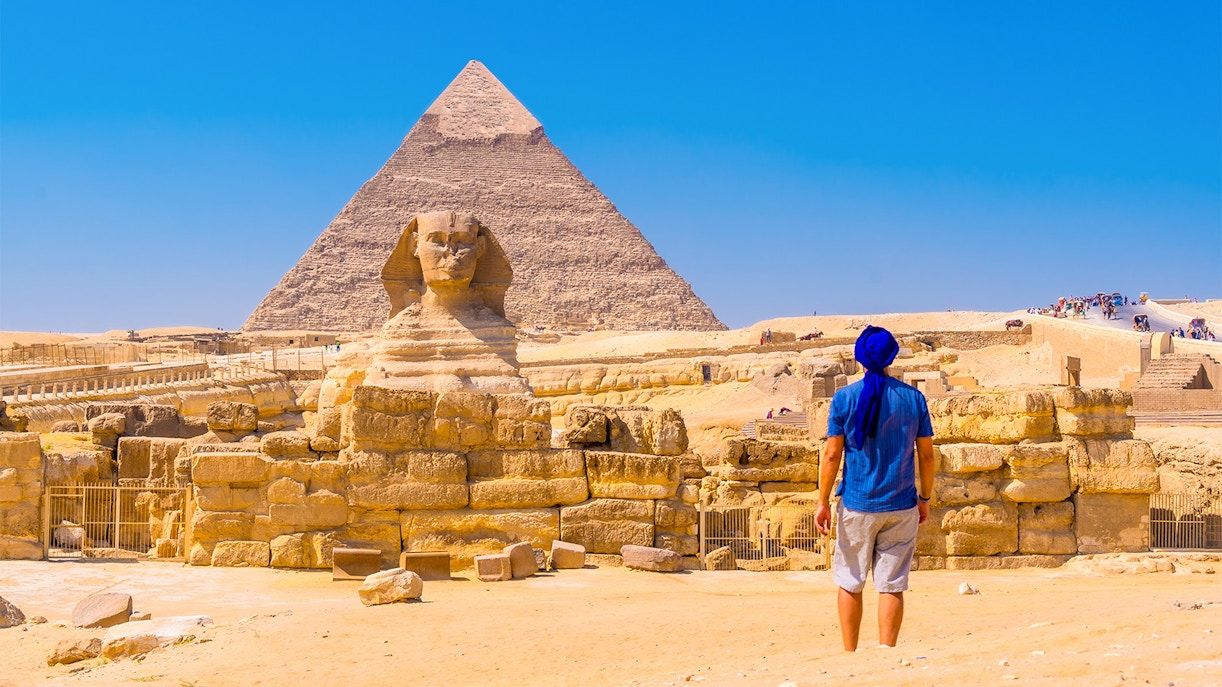
Recognized as a UNESCO World Heritage Site since 1979, the pyramids remain Egypt’s most visited attraction. They are the last surviving Wonder of the Ancient World, welcoming millions each year. Visitors describe the experience as awe-inspiring, though often busy and hot — reviews suggest arriving early or booking a guided tour for context and convenience. Beyond daytime visits, sound-and-light shows bring history to life under the night sky, making the pyramids as enchanting today as they were mysterious in antiquity.


.png)


No comments:
Post a Comment