
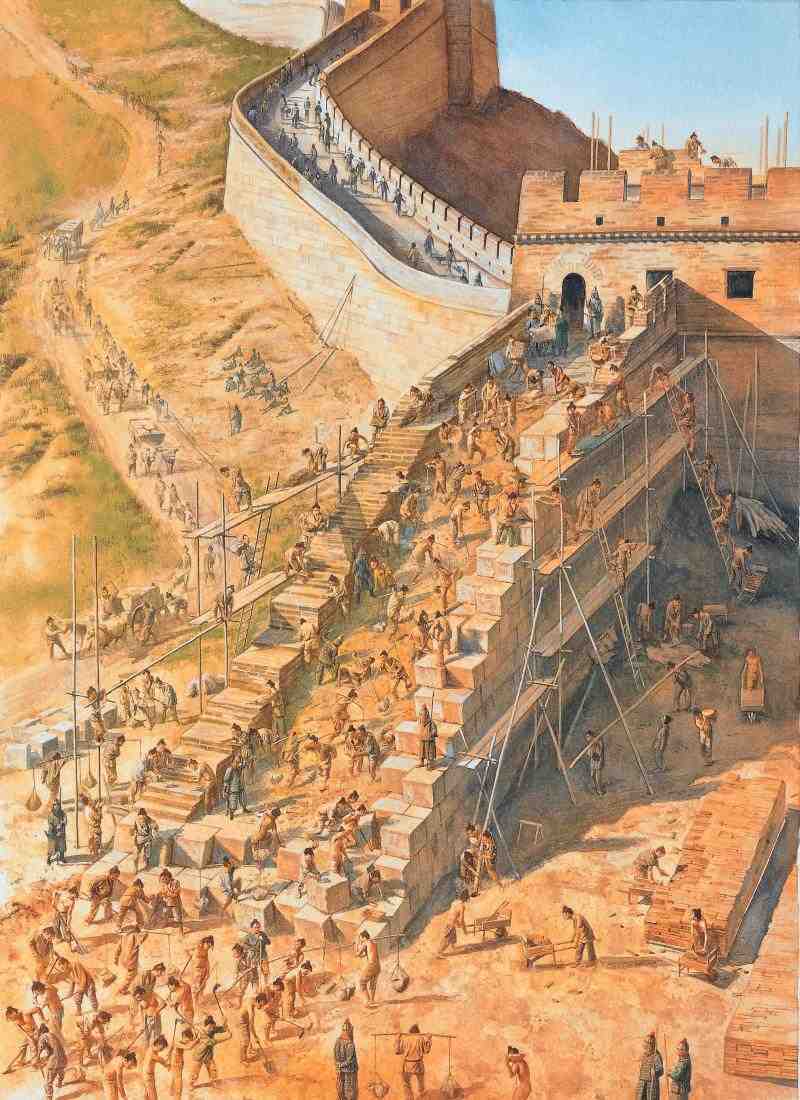
Because the Great Wall of China was constructed by different dynasties over the past two millennia, it’s difficult to condense the timeline into a single story. The history is different depending on:
Throughout the centuries, construction techniques naturally grew more advanced as different dynasties repaired and built on the earlier walls.
In fact, a careful study of the history of the Great Wall of China alone can provide good answers to the question how was the Great Wall of China built. It’s an interesting look at the evolution of Chinese construction design and methods.
- The Modern Great Wall: Most people conjure up images of the mighty stone edifices near Beijing. These modern Ming-era walls were built during the 15th and 16th centuries and are by far the most impressive and reflect the most advanced construction techniques and materials.
- The Early Great Wall: The early sections of the Wall, first built 2,000 years ago, were naturally much less sophisticated and sturdy. The vast majority of these early sections of the wall have disappeared after so many centuries of erosion.
Using Natural Terrain to Construct the Great Wall
As with the modern Ming-era sections, the early builders of the Great Wall used the natural, mountainous terrain to their maximum advantage.
Visitors to the Great Wall today will notice that the walls are typically built on top of high mountains, using steep embankments to their defensive advantage whenever possible.
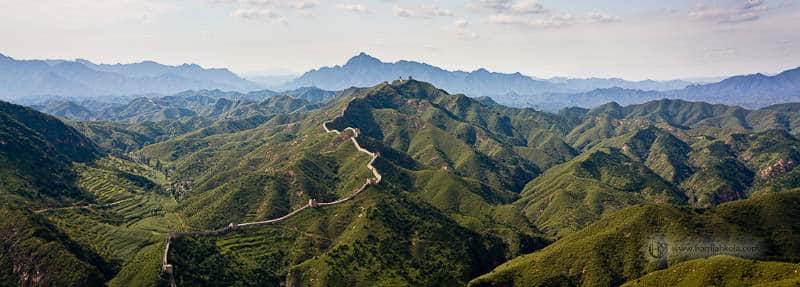
In fact, much of the Great Wall was constructed along the Himalayan Mountain Range, which provided a natural defense (but of course, construction on mountainous terrain was certainly not easy).
On a wider geographical scale, China would be protected from any northern invaders by the Tibetan Plateau to the west and by the Pacific Ocean to the east.
A passage in the Shi Ji (“the records of the grand historian”) describes this sensible engineering approach to the construction of the “first” Great Wall during the Qin Dynasty in 215 BC:
“(General Mian Tian) utilized the natural mountain barriers to establish the border defenses, scooping out the valleys and constructing ramparts and building installations at other points where they were needed.”
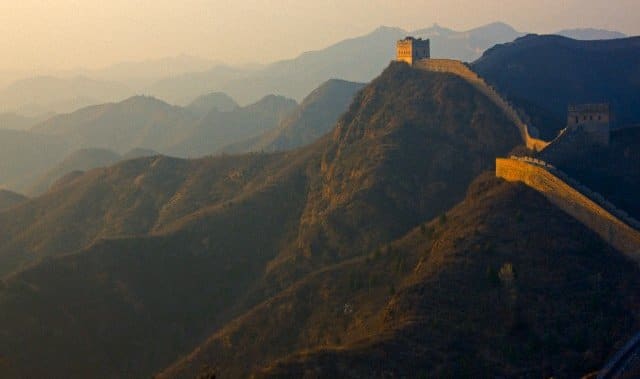
Later dynasties applied this same strategy during subsequent construction efforts.
Great Wall of China: Early Construction Materials and Techniques
The early walls, mostly from the Warring States Period as well as the Qin and Han dynasties, consisted of mainly rammed earth.
While this may sound like flimsy construction materials, these early walls were surprisingly sturdy (fragments exist today despite millennia of erosion in harsh climates).
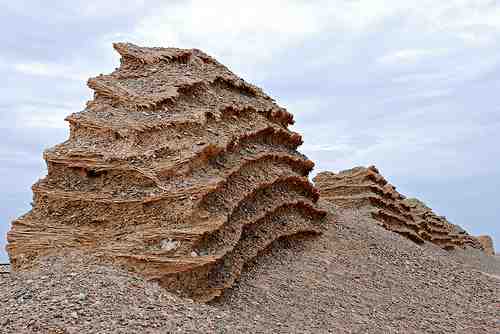
The Chinese were using this rammed (or tamped) earth technique as far back as the Yangshao culture (circa 5000-3000 BC). Suffice it to say, the Chinese were pretty good at building sturdy city walls or fortifications along their borders.
Because of its local availability, the majority of the Wall was constructed out of “loess” or clay-rich soil—using an ancient wall-building technique called hangtu.
Here’s the basic technique: Pour earth and gravel inside removable wooden shutters (like you would pour concrete today). Tamp it down one layer at a time and repeat.
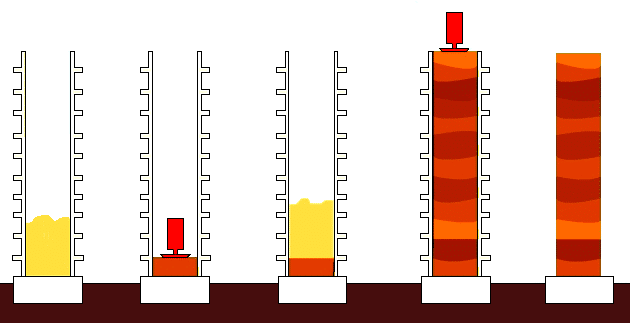
Each layer started out at about 7 inches (18 cm) before being compacted down to 5 inches (13 cm). These rammed-earth walls stood up particularly well in arid areas.
Other Construction Materials for The Great Wall
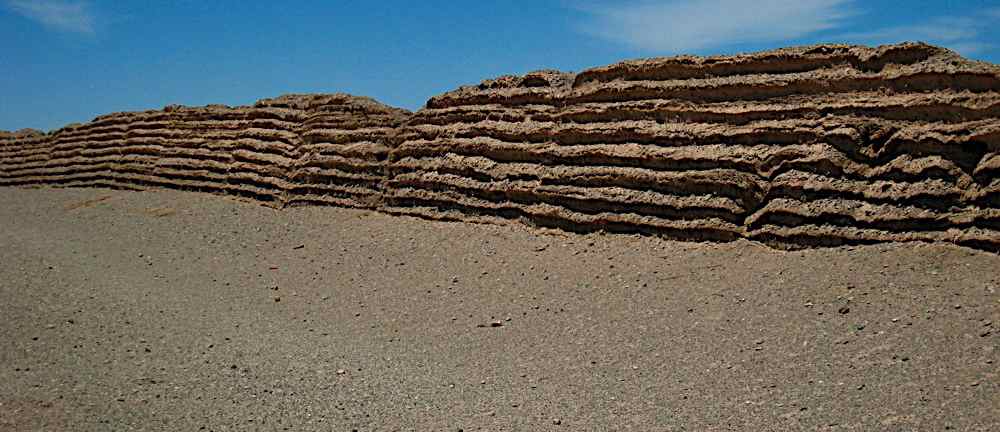
Constructing the Great Wall in the desert, however, presented its own set of challenges. With lots of sand and little else, the builders had to improvise.
The solution?
They made use of gravel as well as native desert plants, especially the tamarisk plant.
Used in tandem, they created surprisingly strong composite building materials by adding in decayed plant matter for added fibrous support (and also increased strength by building a layer of branches between layers). To this day, you can see ruins of Han-era walls in the desert that stand up to 10.5 feet tall (3.2m).
Other areas of the wall were primarily stone walls, which were built in China for several millennia.
The earliest walls were drywall structures without any mortar. But when carefully arranged on top of each other, they became sturdy rock walls that reached 6m high.
Mortar was later added to increase sturdiness and prevent plants from growing in between cracks.
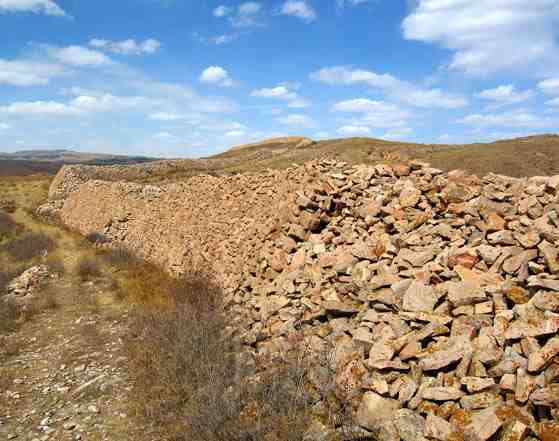
Much later, during the 15th and 16th century walls of the Ming Dynasty, large blocks of granite, limestone, and even some marble was locally quarried and used as main construction materials.
In some rare spots along the wall, Ming builders added ornamental carved bas-reliefs and plaques. In the sections close to Beijing, these can be seen today on Yun Tai (Cloud Platform) at Juyonguan Pass, as well as on the Yanhecheng Wall.

.png)


No comments:
Post a Comment